THE MATERIALS THAT DEFINE MAISON NHÃ AND TOÀN TIẾN HOUSING
- 09/21/2026
- 87 views
Wood – The Material of Warmth and Durability
Wood is one of the oldest materials in architecture and interior design. In Vietnam as well as many Asian countries, wood has long appeared in homes, temples, crafts, and traditional structures.
The reason goes beyond durability. Wood carries a very special feeling: warm, natural, and profound.
Wood grain is never entirely identical. It is this non-uniformity that creates a truly "living" beauty, quite unlike overly polished and cold industrial surfaces.
Within the spaces of Maison Nhã, wood typically plays the role of establishing an emotional foundation. A wooden table, cabinetry, headboard, or small decorative detail all help ground the room, making it deeper and more intimate.
Visually, brown wood tones help balance bright shades like cream, beige, or white. When paired with soft warm lighting, wood creates a relaxing and familiar ambiance, especially suited for long-term stays.
Wood is also a hallmark of the Indochine style, evoking old Indochinese homes, yet when placed alongside modern lines, it becomes sleek and contemporary.
Rattan and Bamboo – A Gentle East Asian Touch
While wood provides depth, rattan and bamboo bring softness.
Bamboo and rattan have been intertwined with Vietnamese daily life for generations. Bamboo is used in housing, household goods, and handicrafts; rattan frequently appears in weaving, chairs, baskets, lamps, and decorative accents.
The defining trait of these two materials is their natural, handcrafted feel.
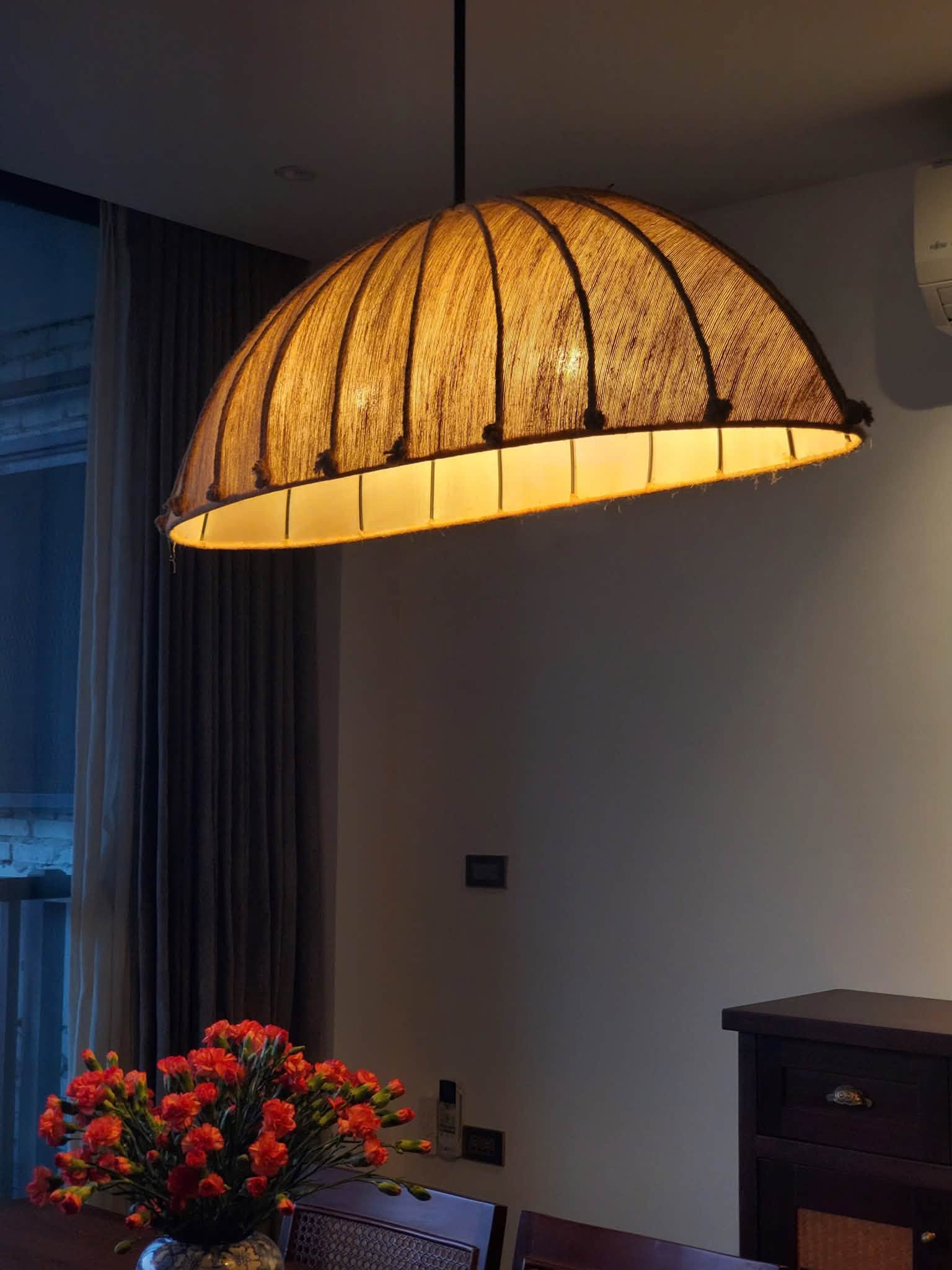
A rattan lamp does more than provide light. As light passes through the woven mesh, it casts intricate, beautiful shadows on walls and ceilings, giving the room greater depth.
Rattan and bamboo also feel lighter than dense, heavy materials. Therefore, when combined with wood, they balance the space and prevent it from feeling overly heavy.
In the spirit of Indochine design, rattan and bamboo also serve as a bridge between Indochinese architecture and indigenous life. These materials align closely with tropical climates, handicraft culture, and traditional Vietnamese aesthetics.
At Maison Nhã, rattan and bamboo are not used in an overly folkloric manner; rather, they are restrained to maintain an East Asian spirit while seamlessly fitting into contemporary living spaces.
Fabric – The Element of Softness
A room would feel entirely different if it consisted only of wood, stone, or metal.
Fabric is the element that softens rigid materials.
Curtains, sofas, bedding, pillows, and upholstered details all contribute to a relaxing atmosphere. Materials with natural, matte surfaces generally evoke warmth and a higher sense of luxury.
Psychologically, soft surfaces make a room feel quieter, particularly in bedrooms or resting areas.
Fabric also excels at light diffusion. A sheer curtain can soften daytime sunlight, creating gentle zones of illumination instead of harsh glare.
This is why Maison Nhã's spaces typically prioritize a "soft" feel over sharp, striking contrasts.
Stone and Brick – Balancing Nature and Permanence
Stone and brick usually serve as foundational elements in architecture.
Historically, stone has been utilized for its high durability and ability to convey solidity. Natural stone surfaces or stone-simulating materials bring a cool, clean, and luxurious feel.
Brick relates more closely to vernacular architecture. From traditional fired bricks to encaustic tiles once popular in Indochinese architecture, these materials evoke the distinctive charm of old houses in Hanoi and many Southeast Asian cities.
When used judiciously, stone and brick balance the warmth of wood, rattan, and bamboo.
It is a harmony of hard and soft, cool and warm, modern and nostalgic.
Metal – Accents of Modernity
Metal appears less frequently but plays a crucial role.
A door handle, table leg, lamp frame, or metallic decorative detail can introduce sharpness and neatness to the overall composition.
In modern design, metal prevents a space from feeling overly "rustic." Particularly when paired with wood and rattan, it provides just the right amount of contrast.
Tones like brass, matte black, or dark metals suit the Indochine spirit well, recalling heritage architectural details while retaining a contemporary edge.
Glass – Inviting Light into the Space
Glass is a signature material of modern architecture.
Its greatest advantage is the ability to channel natural light indoors and expand the sense of space.
Large window frames provide apartments with abundant light, reduce feelings of confinement, and foster a connection with the outdoors.
Particularly in apartments with street or lake views, glass turns the scenery into an active part of the living experience.
Instead of only looking at the interior, guests can watch Hanoi shift throughout the day.
Light – An Intangible "Material"
Light is not a material in the traditional sense, but in interior design, it is arguably just as important.
In the exact same room, different lighting can create entirely different atmospheres.
Strong white light fosters clarity and modernity. Soft warm light yields a warm, private, and deeply relaxing ambiance.
Maison Nhã prioritizes layered lighting with moderate softness, combining natural light and interior fixtures.
The goal is not to make the room intensely bright, but to let light create depth.
A bright zone, a shadowed corner, a lamp casting upward against a wall, or a subtle glow on a wooden surface can all evoke emotion.
Color – The Material Layer of Emotion
Color is another vital component of the material narrative.
Hues of cream, beige, ivory white, wood brown, or muted blue naturally convey stability and comfort.
These tones also allow natural materials to stand out more effectively.
Rather than letting color take center stage, Maison Nhã lets materials and light tell their own story.
It is a relatively restrained aesthetic style that helps spaces retain enduring beauty, rather than blindly chasing fleeting trends.
Why Do Natural Materials Feel So Comforting?
One reason wood, rattan, fabric, and natural light are favored in living spaces is that their surfaces, colors, and textures closely mirror what humans encounter in nature.
These elements foster intimacy and feel less clinical than spaces dominated by glossy surfaces, plastics, or cold metals.
In a serviced apartment, this sensation is exceptionally crucial.
Guests do not simply need a pretty room for taking photographs. More importantly, after spending hours or days inside, the space must remain genuinely comforting.
The Material Foundation Beyond Physical Elements
Looking deeper, what truly defines Maison Nhã and Toàn Tiến Housing extends beyond wood, rattan, and fabric.
There is another kind of "material": how the space is cared for and operated.
A beautiful apartment only holds true value when it is clean, functional, private, and well-maintained.
Behind the visible aesthetics of Maison Nhã lies the operational system of Toàn Tiến Housing: apartment maintenance, housekeeping, guest support, and quality preservation over time.
If Maison Nhã provides the emotional and aesthetic layer, Toàn Tiến Housing acts as the underlying foundation keeping that experience stable.
When Materials Tell a Shared Story
-
Wood brings warmth.
-
Rattan and bamboo carry the breath of East Asia.
-
Fabric creates softness.
-
Stone and brick build a solid foundation.
-
Metal adds a modern edge.
-
Glass invites light inside.
-
And light connects everything together.
When placed in their rightful spots, these materials cease to exist independently.
Together, they narrate a shared philosophy of living at Maison Nhã: never ostentatious, yet deeply layered; avoiding excess, yet ensuring every detail has a reason to exist.
Perhaps that is why what lingers afterward is not merely a well-designed room.
It is the sensation of touching the wooden grain, watching light filter through curtains, sitting beside a rattan chair, and realizing you can slow down just a little bit amidst the pulse of Hanoi.
Maison Nhã & Toàn Tiến Housing — crafted from materials with a story, ensuring every space carries its own emotion.
Would you like any adjustments to this translation, or perhaps formatting it for a specific platform like a website or a printed brochure?